
What is LEAD™?
The LEAD™ Framework was developed by Nicole Dawson, PT, PhD, FNAP (University of Central Florida) and Katherine Judge, PhD (Cleveland State University) to guide rehabilitation professionals in delivering effective, person-centered care for individuals living with dementia.
Designed for physical therapists, occupational therapists, and speech-language pathologists, Leveraging Existing Abilities in Dementia (LEAD™), provides a structured, strength-based approach to support engagement, participation, and functional outcomes across the continuum of care.
The framework builds on key findings from prior research showing:
dementia education and training improve clinician confidence and care delivery
individuals living with dementia benefit from rehabilitation alongside those without cognitive impairment
person-centered care — grounded in the individual’s environment, abilities, and goals — leads to better engagement and outcomes
LEAD™ also addresses common barriers faced by rehabilitation professionals, including:
limited dementia-specific training
uncertainty managing cognitive and emotional behaviors
challenges communicating and engaging with patients
difficulty translating knowledge into everyday clinical practice
To support implementation, Drs. Dawson and Judge developed the LEAD™ training program — an evidence-informed educational model that integrates dementia knowledge, rehabilitation science, and practical treatment strategies across cognitive, physical, and psychosocial domains. It has been found to be impactful in improving confidence and upgraded practice patterns in service provision for patients with dementia in home health therapists.
Rehabilitation professionals have the opportunity to pursue advanced training and become LEAD™ certified Dementia Rehabilitation Specialists (DRS).
The Need for a New Approach
Rehabilitation professionals are increasingly working with individuals living with dementia across care settings, yet many report limited formal training, uncertainty in clinical decision-making, and difficulty translating dementia knowledge into practical treatment strategies.
Traditional rehabilitation models often emphasize deficits, decline, and symptom management. While important, this approach can unintentionally limit participation, engagement, and therapeutic potential.
LEAD™ was developed to shift the focus — toward preserved abilities, meaningful activity, and the person behind the diagnosis.
Evidence & Impact
The LEAD™ framework is informed by research across rehabilitation science, dementia care, and strength-based practice.
Implementation of LEAD™ training has demonstrated meaningful impact, including:
increased clinician confidence in working with individuals living with dementia
improved use of dementia-specific rehabilitation strategies
enhanced engagement and participation during therapy
shifts in practice patterns toward person-centered care
These outcomes reflect the value of a structured framework that translates knowledge into actionable clinical practice.
LEAD™ is grounded in a strength-based, person-centered view of rehabilitation.
It recognizes that even as cognitive changes occur, individuals retain abilities, preferences, relationships, and identity. Rehabilitation becomes most effective when it builds on these preserved capacities rather than focusing solely on loss.
The framework emphasizes:
participation over performance
function over impairment
engagement over compliance
relationships and environment as central to outcomes
LEAD™ supports clinicians in seeing the whole person — and designing care that reflects how individuals live, interact, and adapt within their everyday environments.
The LEAD™ Framework for Rehabilitation Professionals translates this philosophy into a structured rehabilitation model.
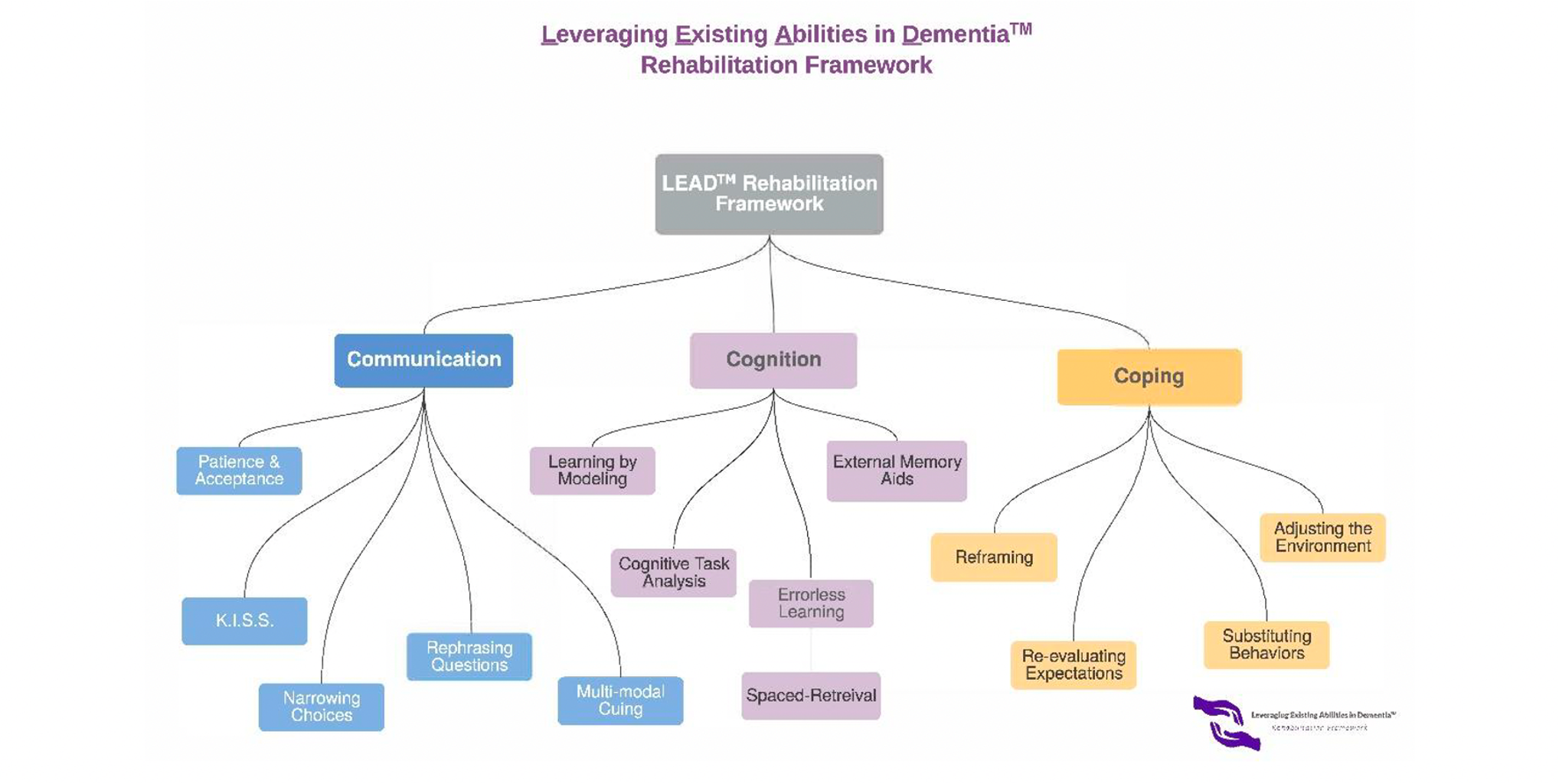
LEAD™ represents a shift in how rehabilitation professionals understand and support individuals living with dementia — from focusing on limitations to recognizing possibility, from managing symptoms to enabling participation, and from treating a diagnosis to engaging a person.
It offers a practical, human-centered pathway for clinicians committed to helping individuals remain active participants in their lives, their care, and their communities.